






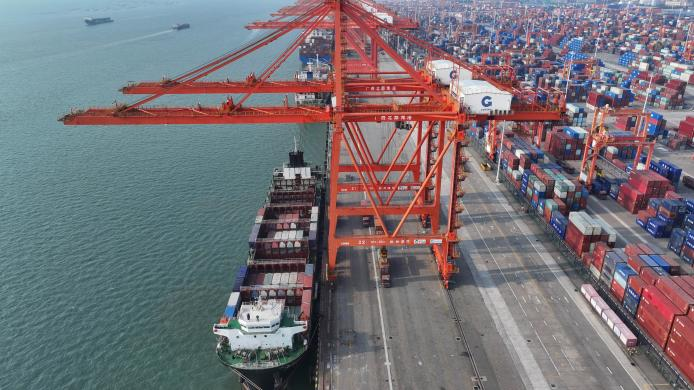
Tensions continue to rise in the Middle East, leading to a sharp decline in traffic through the Strait of Hormuz. Following attacks on several Middle Eastern ports, dry bulk and container shipping in the region has come to a standstill.
Furthermore, as of now, 25 domestic and international airlines have announced the suspension, adjustment, or cancellation of cargo flights to the Middle East. Several key routes have been grounded, and airspace control has been tightened, directly impacting international logistics efficiency, capacity, and freight rates.
Several freight forwarding companies have stated that both sea and air freight on Middle East routes have suspended accepting cargo.
Global freight forwarding giant Kuehne + Nagel stated on March 2nd that the Strait of Hormuz is effectively closed, with container ship traffic in the area dropping to zero. The company is working closely with all carriers to assess cargo congestion points and seek solutions to maintain service continuity for its clients.
On February 27th, the Shanghai Shipping Exchange released the Shanghai Export Containerized Freight Index, which rose 6.5% compared to the previous period. Routes to Europe, the United States, the Persian Gulf, Australia and New Zealand, and South America all saw increases.
Specifically, the market freight rate (occupancy and surcharges) from Shanghai Port to the Persian Gulf’s main ports was US$1327/TEU, a significant increase of 35.4% compared to the previous period. This is attributed to the recent escalation of geopolitical tensions in the region, which has put the transportation market under pressure, coupled with the upcoming traditional Ramadan.
Unlike general foreign trade, which has a longer order placement, production, and transportation cycle, cross-border e-commerce, with its longer timeframe, is more significantly affected by short-term factors.
Furthermore, due to the characteristics of some products, shipment may become difficult. Dangerous goods (DGCargo) are the first to be refused boarding: Due to the increased security level in Middle Eastern territorial waters, shipping companies have begun a comprehensive clearing of containers of batteries and chemicals awaiting dispatch in order to reduce claims risks. Concealment is strictly prohibited! Several ports have already initiated random scanning inspections.
Post time: Mar-09-2026


